 by
by In today’s fast-paced digital world, businesses rely heavily on IT infrastructure to support operations, drive innovation, and maintain competitiveness. However, managing IT systems can be expensive, especially when inefficiencies go unchecked. Many organizations end up spending more than necessary on hardware, software, cloud services, and personnel.
IT infrastructure optimization is no longer a luxury it’s a necessity. By refining your IT setup, you can improve performance, reduce waste, and save costs without compromising service quality. This blog explores effective strategies to optimize IT infrastructure and achieve a sustainable, cost-efficient IT environment.
1. Conduct a Comprehensive IT Infrastructure Assessment
The first step in optimization is understanding your current IT landscape. Organizations often operate with legacy systems, redundant hardware, and underutilized software, all of which contribute to unnecessary costs. Conducting a comprehensive IT infrastructure assessment provides insights into which resources are underperforming or redundant.
During the assessment, review hardware utilization, software licenses, network performance, and cloud services. Identify overlapping functionalities or unused licenses. This data allows IT teams to make informed decisions on where to cut costs and how to improve efficiency, forming the foundation of any effective IT infrastructure solution.
2. Embrace Virtualization Technologies
Virtualization has revolutionized IT infrastructure management. By using virtual servers and desktops, companies can reduce the physical hardware footprint and consolidate resources. This not only lowers capital expenditure on servers but also reduces energy consumption and maintenance costs.
Furthermore, virtualization enhances flexibility. IT teams can easily deploy new applications, scale resources up or down based on demand, and quickly recover from system failures. By adopting virtualization as part of your IT infrastructure solution, businesses can achieve both cost reduction and improved operational agility.
3. Adopt Cloud-Based Solutions
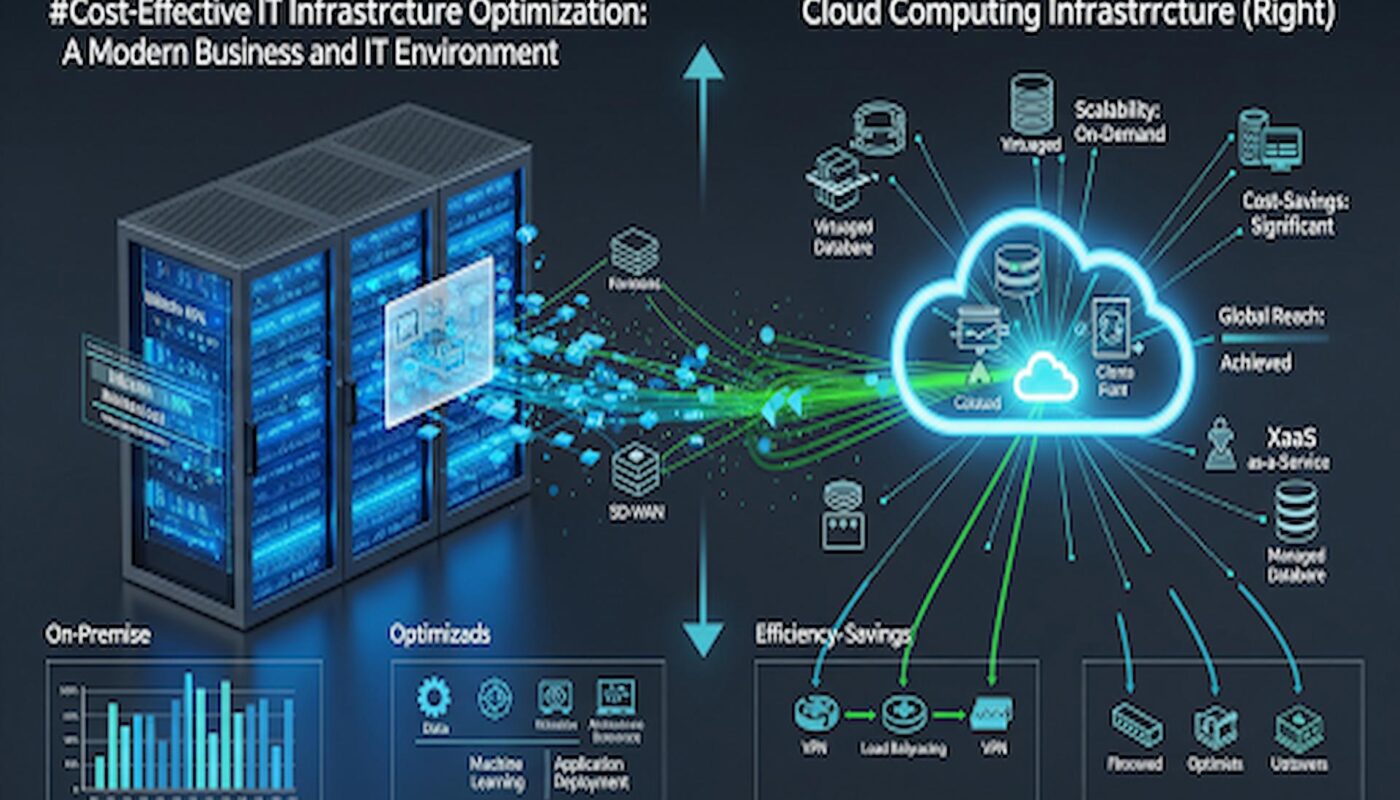
Cloud computing offers scalable and cost-effective alternatives to traditional on-premises IT systems. Migrating to cloud services can help organizations avoid hefty upfront hardware costs, minimize maintenance, and pay only for the resources they use.
Cloud adoption also supports hybrid and multi-cloud strategies, giving businesses the flexibility to distribute workloads efficiently. When combined with proper monitoring and cost management tools, cloud services can significantly lower operational expenses while maintaining performance and security standards.
4. Streamline Software Licenses and Subscriptions
Software costs often represent a significant portion of IT budgets. Many organizations unknowingly pay for redundant licenses or subscriptions that employees rarely use. Streamlining software management is critical for cost control.
By conducting regular software audits, businesses can identify underutilized applications, negotiate better vendor contracts, and implement license management tools. Effective software optimization ensures that employees have access to the right tools while minimizing unnecessary expenditures, strengthening your IT infrastructure solution.
5. Implement Energy-Efficient Hardware
Energy consumption is a hidden cost in IT infrastructure. Servers, data centers, and networking equipment require substantial power, and inefficient systems can drive up energy bills. Upgrading to energy-efficient hardware reduces operational costs and supports sustainability initiatives.
Investing in modern, low-power servers and storage devices, optimizing cooling systems, and leveraging energy management software can significantly reduce energy waste. Organizations that prioritize energy efficiency can save money while demonstrating environmental responsibility, aligning with modern IT best practices.
6. Optimize Network Performance
A slow or inefficient network can cause operational delays and increase costs due to downtime, support needs, and lost productivity. Network optimization focuses on improving speed, reliability, and scalability while minimizing expenses.
This can be achieved by consolidating network equipment, implementing software-defined networking (SDN), and using intelligent routing protocols. Regular monitoring and proactive maintenance also prevents bottlenecks and downtime. A well-optimized network is central to any IT infrastructure solution that aims to reduce costs.
7. Automate IT Processes
Automation reduces manual intervention, minimizes human error, and accelerates routine tasks. IT process automation can include server provisioning, patch management, system monitoring, and backup operations. By automating these workflows, organizations free up IT personnel to focus on strategic initiatives rather than repetitive tasks.
Automation tools also enable predictive maintenance and faster incident response, reducing downtime and associated costs. Businesses that adopt automation as part of their IT infrastructure solution see measurable gains in efficiency, reliability, and cost reduction.
8. Consolidate Data Storage
Data storage is another area where costs can spiral if not properly managed. Organizations often maintain multiple storage silos, some of which are underutilized or redundant. Consolidating data storage reduces complexity, lowers maintenance costs, and improves accessibility.
Using centralized storage systems or network-attached storage (NAS) solutions ensures that data is organized and easily retrievable. Combining consolidation with cloud backup solutions further enhances scalability and disaster recovery capabilities, forming a robust and cost-effective IT infrastructure solution.
9. Monitor and Optimize Continuously
Optimization is not a one-time activity; it requires ongoing monitoring and adjustment. Performance metrics, utilization rates, and cost analysis should be tracked continuously to identify new opportunities for improvement.
Implementing dashboards and analytics tools allows IT teams to respond proactively to changing demands, avoid resource over-provisioning, and optimize spending. Continuous optimization ensures that your IT infrastructure solution remains efficient, agile, and cost-effective over time.
10. Focus on Employee Training and Awareness
Even the best infrastructure can underperform if employees are unaware of efficient practices. Training staff to use IT resources effectively can reduce waste, prevent security risks, and enhance overall productivity.
Educating employees about software usage, data management, and energy-efficient practices reinforces the organization’s optimization strategies. A knowledgeable workforce ensures that the IT infrastructure solution functions as intended, maximizing cost savings and operational efficiency.
11. Partner with a Trusted IT Infrastructure Solution Provider
Engaging an experienced IT infrastructure solution provider can accelerate optimization efforts. These providers offer expertise in system assessment, virtualization, cloud migration, and process automation, helping organizations implement best practices without unnecessary trial and error.
Outsourcing certain IT management functions also allows companies to focus on core business operations while reducing overhead. Choosing the right partner ensures that optimization strategies are effectively executed, delivering measurable cost reductions and enhanced infrastructure performance.
Conclusion
Optimizing IT infrastructure is not merely about cutting costs; it is about creating a sustainable, scalable, and efficient IT environment. From virtualization and cloud adoption to automation, energy efficiency, and continuous monitoring, there are multiple strategies to reduce expenses while maintaining high performance.
By implementing these strategies, businesses can turn IT from a cost center into a strategic advantage. A carefully planned IT infrastructure solution ensures that resources are utilized effectively, operational risks are minimized, and overall costs are controlled, empowering organizations to thrive in a competitive digital landscape.